
Why CMS and OIG Are Zeroing In on Conflict of Interest
What health plans must prove during audits Conflict of interest compliance is now a front-line issue for health plans. Regulators […]
What health plans must prove during audits Conflict of interest compliance is now a front-line issue for health plans. Regulators […]

In the complex healthcare landscape, delegating critical functions to third-party administrators (TPAs) can streamline operations but also introduce significant compliance risks. With CMS intensifying oversight, health plans must recognize that accountability for every delegated action lies squarely with them. From data integrity gaps to missed SLAs, the hidden risks can lead to audit findings and financial penalties. Discover how a continuous, digital-first Delegation Oversight approach can transform your TPA management, ensuring compliance and protecting your members. Don’t let your vendors define your risk profile, take control and gain confidence in your oversight strategies.

For health plans, compliance is no longer a back-office task. It is central to protecting revenue, meeting CMS and state
The CMS Program Audit Calendar for Health Plans is more than a timeline; it’s a test of preparedness. CMS Program
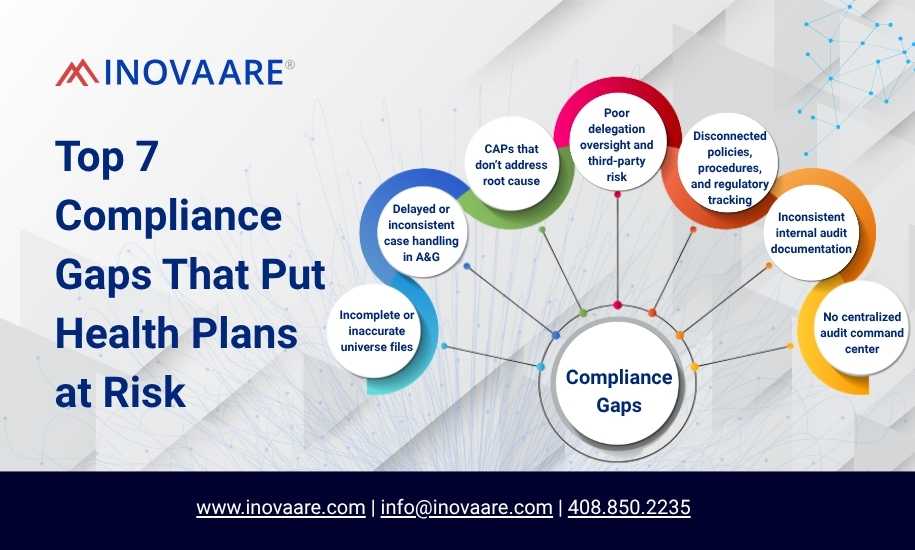
Compliance gaps are costing more than just fines CMS Program Audits are not just a regulatory formality, they are high-stakes

Inovaare Perspective | This article breaks down what the OBBBA really means for payers and why payer-focused cloud platforms like Inovaare are uniquely positioned to help health plans move from reactive to resilient.

CMS-0057-F is reshaping how health plans handle prior authorization, data sharing, and compliance transparency. This guide breaks down what’s changing, what’s at risk, and how payers can prepare to meet the 2026–27 mandates with confidence.
Every health plan faces CMS audits as a regulatory requirement, not a surprise event. Yet, for many, preparing CMS compliant
CMS has introduced key RADV audit updates that raise the bar for health plan accountability. This blog breaks down what payers need to know, including changes to sampling, extrapolation, and error rate calculations, and how to stay audit-ready. Learn how automation, data quality, and GenAI can help reduce risk and improve compliance with the new CMS RADV audit requirements.

CMS policy changes are putting new pressure on Medicare Advantage plans. From compliance and audits to revenue recovery, this blog breaks down what’s changing, what it means for payers, and how to respond with better data, automation, and oversight.