
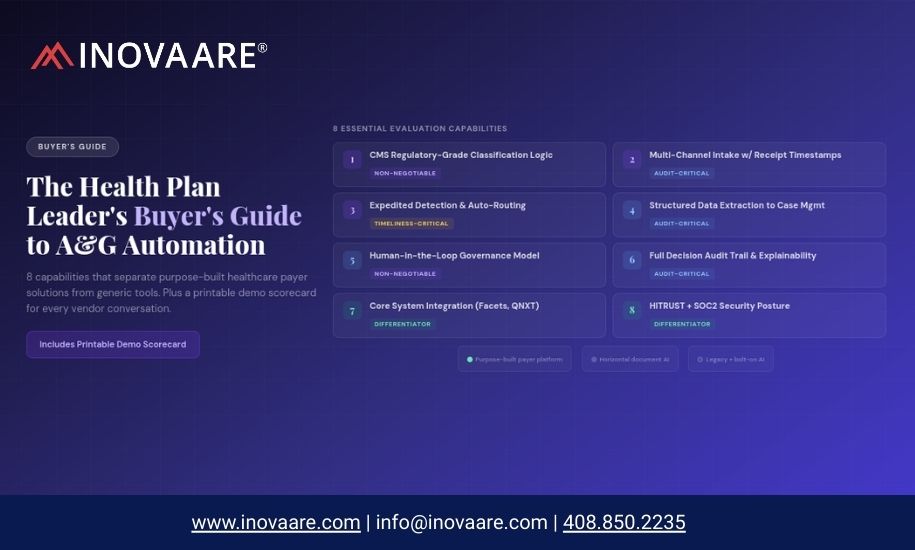
The Health Plan Leader’s Buyer’s Guide to A&G Intake Automation Platforms
You’ve decided manual A&G intake is no longer sustainable. Now you’re evaluating platforms. This guide gives you the 8 capabilities […]

You’ve decided manual A&G intake is no longer sustainable. Now you’re evaluating platforms. This guide gives you the 8 capabilities […]
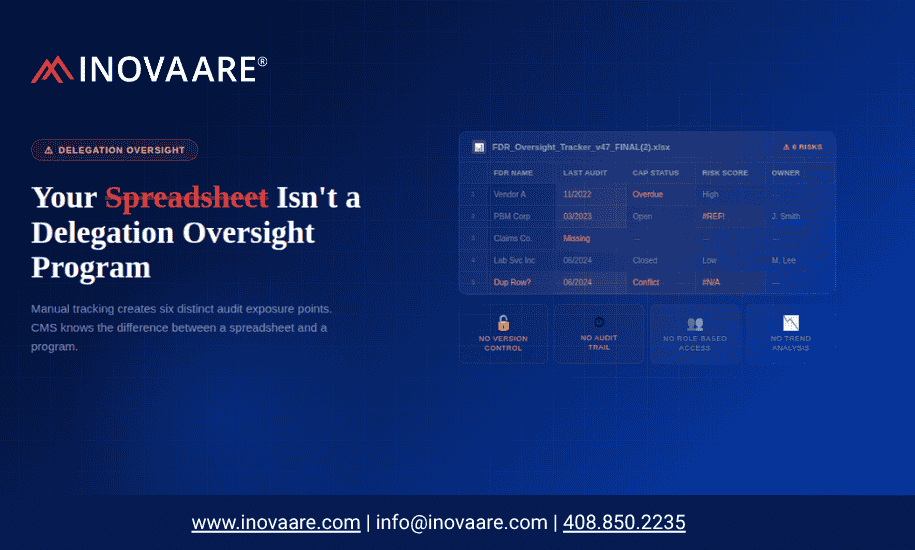
Health plans that manage FDR oversight in Excel and email have a documentation problem they won’t discover until it’s too
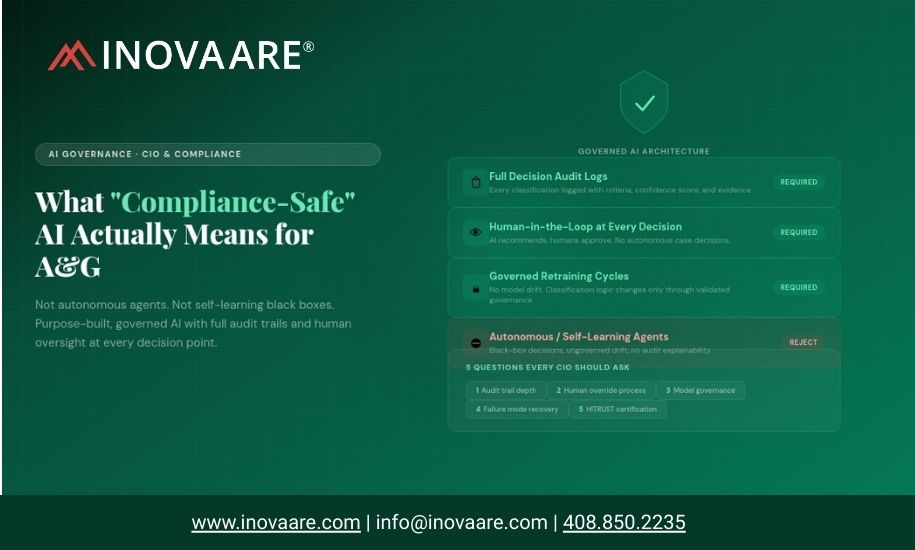
Health plan CIOs and compliance leaders have legitimate concerns about deploying AI in appeals and grievances workflows. “Autonomous agents” and
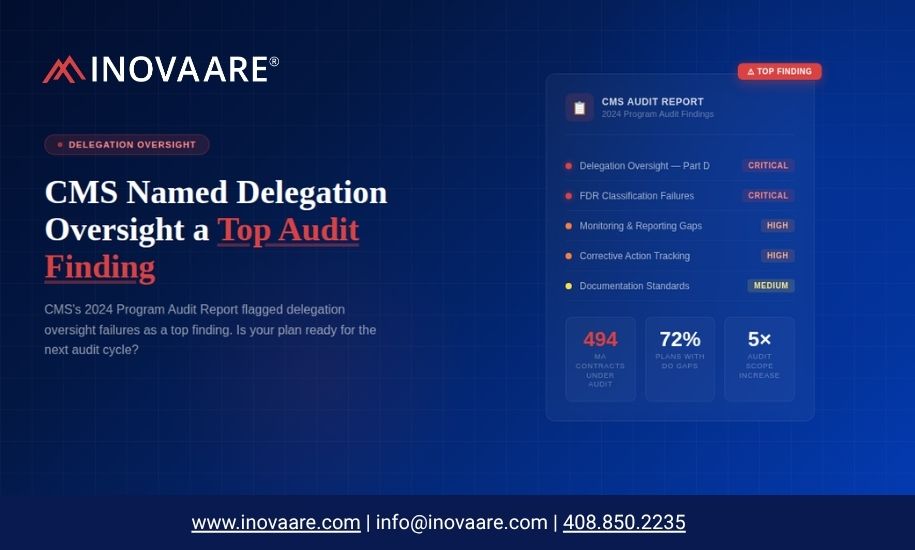
CMS’s 2024 Program Audit Report explicitly flagged FDR oversight failures as a recurring deficiency across Medicare Advantage plans. With CMS
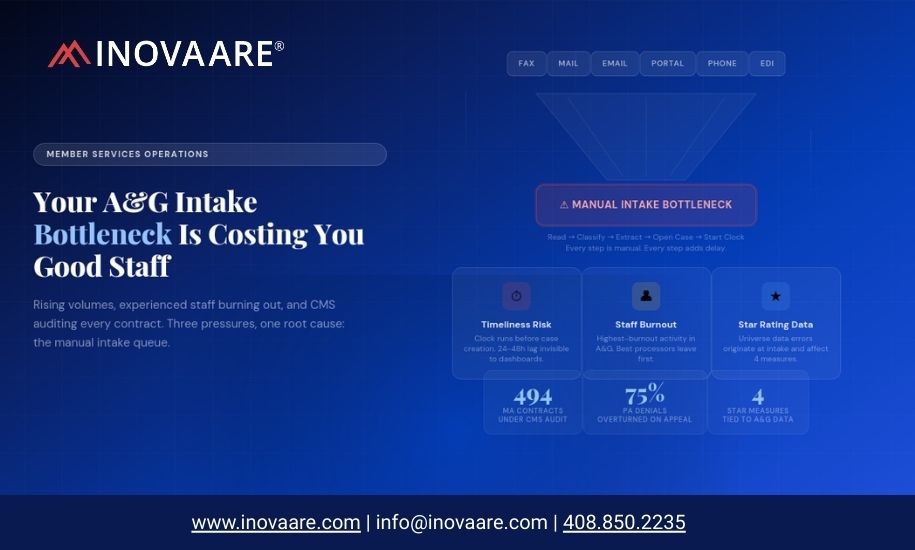
Appeals and grievances volumes are rising across Medicare Advantage. Staff who process them are burning out and leaving. CMS is
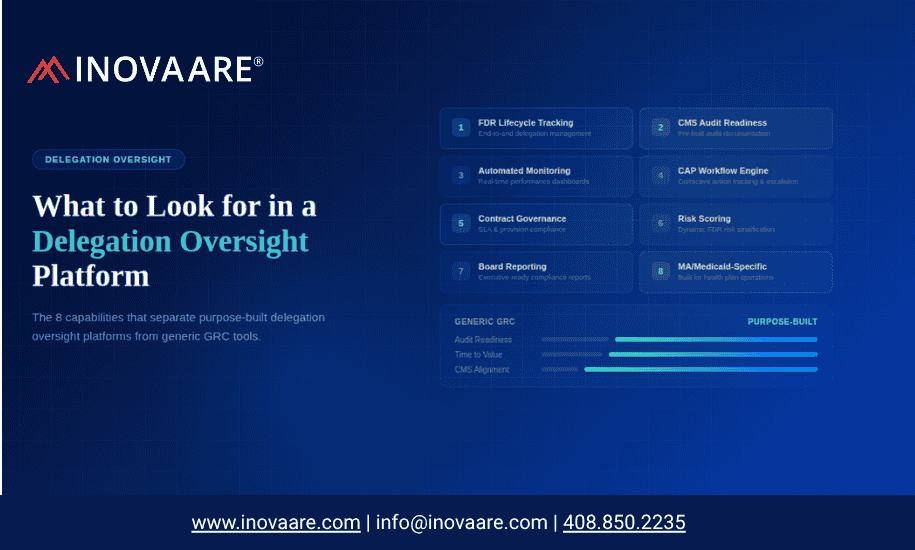
Generic FDR oversight software were not built for CMS FDR requirements. Here’s how to evaluate delegation oversight platforms on the
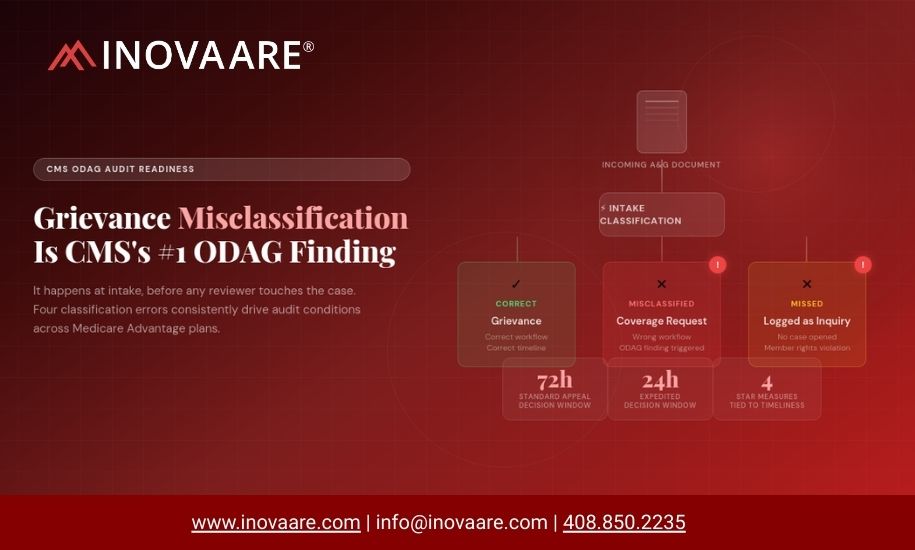
CMS auditors don’t just test timeliness — they test whether your plan correctly identified what it received in the first
OIG’s Medicare Advantage compliance guidance points to a shift from process verification to operational surveillance. Health plans are increasingly expected to monitor trends continuously, detect behavioral patterns across denials, appeals, delegated oversight, and data quality, and demonstrate awareness of emerging risk before it becomes an audit issue.
Compliance failures rarely begin with misconduct. They begin with variability. In healthcare payer operations, compliance risk rarely shows up as
In payer operations, Appeals & Grievances is where policy meets reality. A&G automation governance is becoming an essential aspect of